With water security becoming an increasing concern for golf clubs, Verulam Golf Club General Manager Paul Keen explains how a five-year project is helping the club reduce its reliance on mains water
With restrictions and widespread hosepipe bans becoming increasingly common, some golf clubs are taking matters into their own hands to secure large quantities of water when it’s needed most.
More and more clubs are undertaking projects aiming to capture water and store it for future use. At Verulam Golf Club, General Manager Paul Keen was prompted to consider his own harvesting system after the threat of losing access to the mains supply.
“It started after a hot, dry summer in 2021, and conversations in the industry were bubbling up about clubs potentially losing mains water,” he said.
“We started looking at the idea of coming off the water supply and the implications around that. As we had no water supply of our own, we could potentially face the risk of having no business, so that’s why we started looking into other alternatives.”
Five years ago, Verulam began a water sourcing and harvesting project aimed at utilising natural water reserves and reducing its dependence on mains water.
“The decision was based on industry guidelines, listening to what the experts had to say and what they see the future looking like,” Paul said. “I discussed it with our course director first, and we both thought it was sensible to start processing exactly what it would look like.”
Building the reservoir and borehole
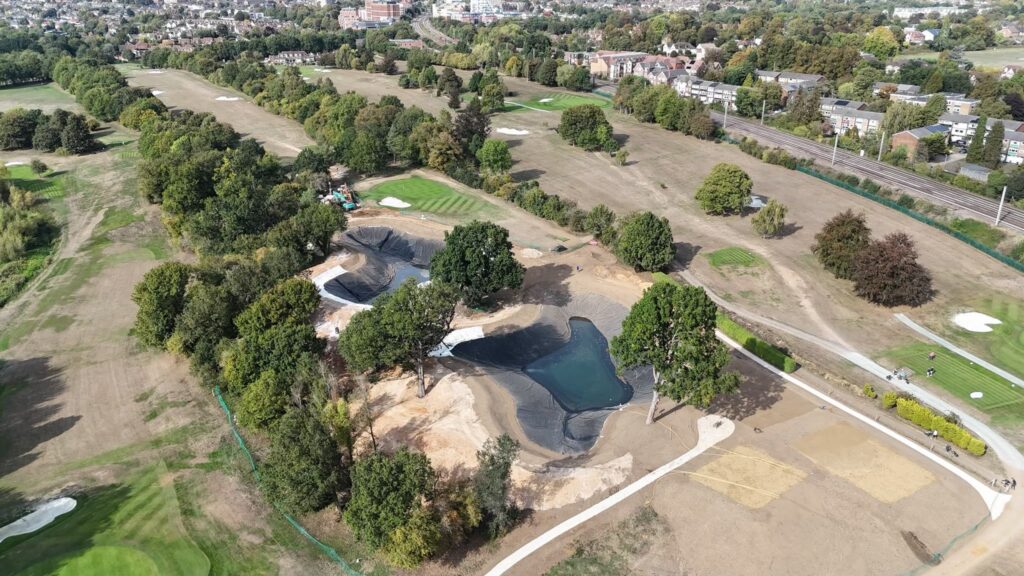
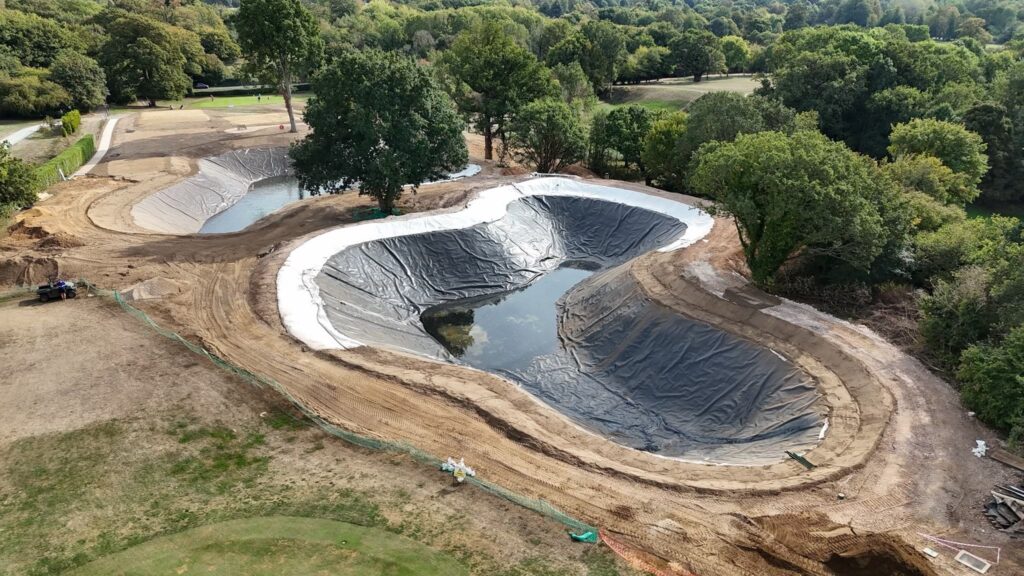
What materialised were plans to build the club’s own borehole and reservoir, fitted with water-transfer pipes and drainage channels to collect excess rainfall.
Once operational, the club would be able to harvest enough water to maintain greens, tees, surrounds and bunkers – allowing the course to function with less reliance on mains water if restrictions were introduced.
The project required a comprehensive redesign of the par 3 10th hole, as well as a considerable commitment of time, effort and money. However, the support of the club’s board was secured early, as the benefits of the project outweighed the expenses.
“There was a fairly unanimous agreement amongst everyone that, if the dry weather becomes more and more prevalent, then the costs of building a reservoir in the future would go up,” he said. “We wanted to take a proactive approach in that sense, by trying to look at that option early.
“Cost wasn’t the only driving factor. It was also about ensuring we had our own water supply so that we could irrigate the golf course even if there were any water bans on golf clubs in the future.
“Taking the standard 20 cubic metres a day from the borehole would give us 7300 cubic metres of water a year. Add that to approximately 2000 more we capture from rainfall, and we could feasibly access up to 9500 cubic metres a year. That would go a long way to replacing our reliance on mains water.”
Implications of an ambitious project
But implementing these water harvesting systems did not happen overnight, and ecological considerations involving a protected river, bird nests and bat roosts proved difficult to work around.
“The challenges around ecology and those processes were much longer than we thought they would be. We worked alongside council and independent ecologists, so there was discharge of conditions within the planning process.
“While they were fully on board with what we were doing, it did take a long time to get things in place. Then we had the planning side of things. Everything had to be done considerably in advance.
“We’re really close to the River Ver, which is extremely protected, so we can’t touch that water supply at all. You can only take trees down outside of bird nesting season, and can’t take trees down at all that have potential for bat roosting. So, there were many things we had to be mindful of.”
Benefits of a new system
As the project nears completion, Paul is delighted with the course’s transformation and recommends that other clubs consider developing their own water harvesting system.
“The last two summers have been very hot and dry and water was in scarce supply. If we face another similar summer, there is a growing likelihood of restrictions being imposed on portable water, and if clubs don’t get ahead of that then they could get restricted.
“I’d recommend anyone starting their own project to get a good consultant that understands the planning applications. You can do them yourself, but they can be laborious and complicated.
“There are lots of things you need to understand about the process, so it’s good to have someone guide you through it.”
As one project finishes, Verulam is already exploring what comes next. Work is already underway to establish whether a second reservoir could be introduced at the club.
“We’re undertaking a feasibility study to see if we could build a second reservoir and how we would potentially build something for fairway irrigation.
“It’s taken us five years to finish this project, and now we’re already looking at how we can get another one!”
Key takeaways:
- Consider future impact of potential mains water restrictions
- Be mindful of the project’s lead time and unanticipated delays
- The short-term cost can be worth the long-term benefit
- Assess if a consultant would help save time on complicated tasks