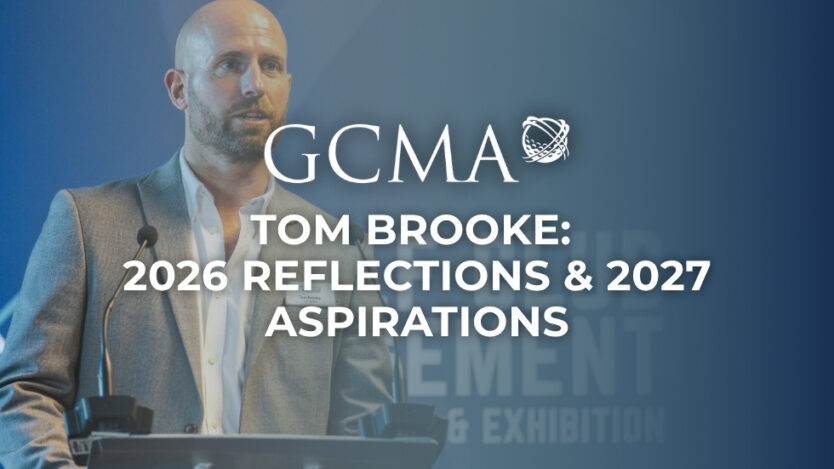
AAs 2026 draws to a close, it provides an opportunity to reflect on another year of progress for the Golf Club Management Association, consider the changing landscape of golf club management and look ahead to the opportunities and challenges facing the profession in 2027.
It has been a significant year for the Association, with continued investment in education and professional development, growing recognition of golf club management as a profession, enhanced support for those working within the sector and increased collaboration across the wider golf industry.
At the start of the year, the Association took an important step forward with the decision to adopt the name Golf Club Management Association. This development reflects our ambition to broaden our reach and strengthen our position within the golf industry, while retaining our commitment to supporting the people responsible for managing and leading golf clubs.
As the demands placed on golf clubs continue to evolve, so too must the skills, knowledge and professional support available to those leading them. Throughout 2026, this has remained central to our work.
I’d like to highlight some of the key developments from the past 12 months and share our priorities for the year ahead.
Investing in the Future of Golf Club Management
Professional development remains one of the most important areas of focus for the GCMA, particularly as the responsibilities of golf club managers continue to expand beyond the traditional boundaries of club operations.
It is now just over two years since we launched our Advanced Management Programme, and I’m delighted with the progress made in establishing it as a high-quality, modern and accessible professional development pathway for golf club managers.
We have now successfully delivered at least one of every Certificate within the Programme, with delegate satisfaction ratings exceeding 95% on every course. This is testament to the quality of our specialist training providers and the appetite for continued professional development across the sector.
A particular highlight this year was the introduction of our first Leading and Managing People Certificate, providing delegates with three days of focused learning and development around leadership, people management and the skills required to build successful teams.
Alongside this, our residential Principles of Golf Club Management Certificate continues to play an important role in developing the next generation of industry professionals. This year, 15 emerging talents and future golf club managers came together at Hillside Golf Club for an intensive week of learning, with a special behind-the-scenes visit to Royal Birkdale, host venue of The 154th Open Championship.
Developing the next generation of golf club leaders is vital to the long-term health of our industry, and it is particularly encouraging to see the enthusiasm and ambition of those beginning their management careers.
Raising Professional Standards and Recognition
Another important milestone during 2026 was the GCMA surpassing 100 Accredited members.
Accreditation provides formal recognition of an individual’s experience, knowledge and professional achievements, helping to demonstrate the value of professional expertise within golf club management.
Our ambition is to establish GCMA Accreditation as a recognised benchmark of professionalism across the industry. This means increasing awareness among golf clubs, employers, Boards and Committees, and demonstrating how professional accreditation can support recruitment, staff development and effective club leadership.
As golf clubs face increasingly complex operational, commercial and people-management challenges, recognising and investing in professional management has never been more important.
We will continue to build awareness of the Accreditation programme throughout 2027, working with the wider industry to strengthen its recognition and value.
Mental Health and Wellbeing: Supporting the People Behind Our Clubs
The wellbeing of those working in golf club management is another area receiving increasing attention.
While managing a golf club can be an extremely rewarding career, it also brings considerable responsibility and pressure. From managing teams and finances to maintaining facilities, engaging with members and navigating increasingly complex business challenges, the demands on club managers are significant.
Through the support of the GCMA Benevolent Fund, we have been able to train and qualify an additional Mental Health First Aider in every region during 2026, further strengthening the support network available to those within the profession.
The Association also continues to provide access to a range of personal support services, including a confidential 24-hour counselling helpline, employment law advice and employment dispute cover.
We believe that supporting the people who lead and manage golf clubs is fundamental to building stronger, healthier and more sustainable businesses. This will remain an important part of the GCMA’s work moving forward.
Bringing the Golf Club Management Community Together
Collaboration and the sharing of knowledge are essential to the continued development of any profession, and our national and regional events remain an important part of the GCMA’s work.
Throughout 2026, we have brought golf club management professionals together through a range of events, including our successful AGM at Conwy Golf Club and the National Members Championship at Frilford Heath.
Our 2027 AGM will take place at Fulford Golf Club in York, while next year’s National Members Championship will be hosted at High Post.
Beyond these individual events, our regional network continues to provide opportunities for golf club managers to share experiences, discuss common challenges and learn from one another.
We are currently working to enhance the quality and consistency of our regional offering, drawing on feedback from across the Association to develop more relevant business meetings, educational opportunities and professional networking.
Our aim is to ensure that the GCMA’s regional network continues to provide meaningful value and contributes to a stronger, more connected golf club management profession.
2027 Golf Club Management Conference and Exhibition
Planning is also underway for our next Golf Club Management Conference and Exhibition, which will take place at Wokefield Park from 14 – 16 November 2027.
As the Association’s flagship biennial event, the Conference brings together golf club management professionals, industry suppliers, Business Partners and other key stakeholders for three days of education, discussion, networking and collaboration.
The 2027 programme will feature expert speakers, practical workshops and opportunities to explore some of the biggest challenges and opportunities facing golf club management.
The accompanying exhibition will provide a platform for suppliers and industry partners to showcase new products, services and innovations, helping golf clubs discover solutions and ideas to support their businesses.
The Conference will once again culminate in our Gala Dinner and Member Awards, celebrating excellence and achievement within the profession.
We look forward to welcoming colleagues and partners from across the golf industry for what promises to be another important occasion for the sector.
A Stronger Voice for Golf Clubs Across the Industry
An increasingly important part of the GCMA’s role is ensuring that the experiences and interests of golf club managers are represented in wider industry discussions and decision-making.
We continue to work closely with fellow associations, industry organisations and governing bodies across Great Britain and Ireland, collaborating on issues that have a direct impact on golf clubs and the future of the game.
One of the most significant areas of focus during 2026 has been water management, particularly following the prolonged periods of drought experienced over the summer.
Water availability, usage and environmental sustainability are becoming increasingly important considerations for golf clubs, with implications for course maintenance, facilities management and long-term business planning.
Through our industry collaborations, we are helping to ensure that the practical needs and experiences of golf clubs are properly represented. This includes making representations to Government through the All-Party Parliamentary Group for Golf (APPGG), while developing closer relationships with the water industry and Environment Agency.
A key part of this work is establishing a clearer understanding of water usage across the golf industry. An industry-wide water usage survey will shortly be circulated, providing an opportunity to build a stronger evidence base and support more informed conversations with policymakers, regulators and other stakeholders.
We would encourage golf clubs and industry colleagues to engage with this work. The more comprehensive our understanding of the challenges facing the sector, the better positioned we will be to influence future policy and develop practical solutions.
Listening to the Industry and Shaping Future Priorities
Understanding the challenges and priorities of those working in golf club management is essential to ensuring that the Association continues to evolve in the right direction.
Our 2026 GCMA Member Survey has recently concluded, and we are currently reviewing the responses to identify key themes, areas for improvement and priorities for the future.
The findings will help inform our plans for 2027 and beyond, ensuring that our work continues to reflect the changing needs of the profession and the wider golf industry.
Engagement, collaboration and a willingness to adapt will remain central to our approach.
Looking Ahead to 2027
Reflecting on 2026, I am incredibly positive about the progress being made, both within the GCMA and across golf club management more broadly.
From the continued development of professional education and accreditation to our work around mental health and wellbeing, regional engagement and industry representation, there is a great deal to build upon.
However, the challenges facing golf clubs are not standing still.
The expectations of golfers and club members continue to change. Recruitment and retention remain important considerations, while financial pressures, environmental sustainability, technological developments and the need for effective leadership all contribute to an increasingly demanding operating environment.
The role of the golf club manager is evolving accordingly, requiring an ever-broader range of commercial, operational and leadership skills.
At the GCMA, we believe that investing in the people who manage and lead golf clubs is fundamental to the long-term success of the businesses they serve and, ultimately, the wider golf industry.
Our commitment for 2027 is to continue raising professional standards, developing accessible opportunities for education and career progression, strengthening the support available to those working in the profession and ensuring that golf club management has a strong and influential voice across the industry.
And if you are not yet part of the GCMA, there has never been a better time to get involved. Whether you are an established golf club manager, an emerging industry professional or someone working alongside the golf club management sector, the GCMA offers a platform to connect, learn and help shape the future of our profession. We would love to welcome you to the Association in 2027. Find out more here.
I would like to thank everyone who has worked with, supported or contributed to the GCMA throughout 2026, including our members, Business Partners, industry colleagues, education providers and wider network of supporters.
The continued development of golf club management is a collective effort, and we look forward to building on the progress made this year as we work towards a successful 2027.
On behalf of everyone at the GCMA, our Board of Directors and Regional Managers, I wish you and your families a very happy festive period and every success for the year ahead.
Tom Brooke
Chief Executive Officer
Golf Club Management Association
By Mark Shanley