
ClubNet’s John Aherne explains how integrated systems can streamline operations and improve the member experience.
From the way clubs make strategic decisions to how courses are maintained and members are engaged, technology is reshaping every corner of the game.
In this series, we will explore the innovations redefining modern golf operations and what they mean for clubs, professionals and players alike.
We will look at:
- Data-driven decision making, examining how clubs are using real-time insights to guide everything from pricing and participation to retail performance and coaching outcomes. Smart data is no longer a luxury, it is becoming essential to staying competitive.
- Smarter operations and automation, where integrated software, booking systems and AI-powered tools are streamlining administration, freeing up staff time and improving profitability.
- Groundbreaking agronomy and maintenance technology that transforms sustainability, efficiency and playability, from GPS-guided machinery to advanced irrigation and turf analytics.
- Member experience and engagement technology, where apps, personalisation tools and digital communication platforms are helping clubs build stronger, longer-lasting relationships.
In this latest installment, we’re in conversation with John Aherne, CEO of ClubNet Systems, about how integrated technology can reduce administration, improve visibility across the business and support a smoother member experience, as well as why reliable connectivity is becoming essential to modern golf club operations.
Can you start by explaining what ClubNet does and the types of digital infrastructure solutions you provide for golf clubs?
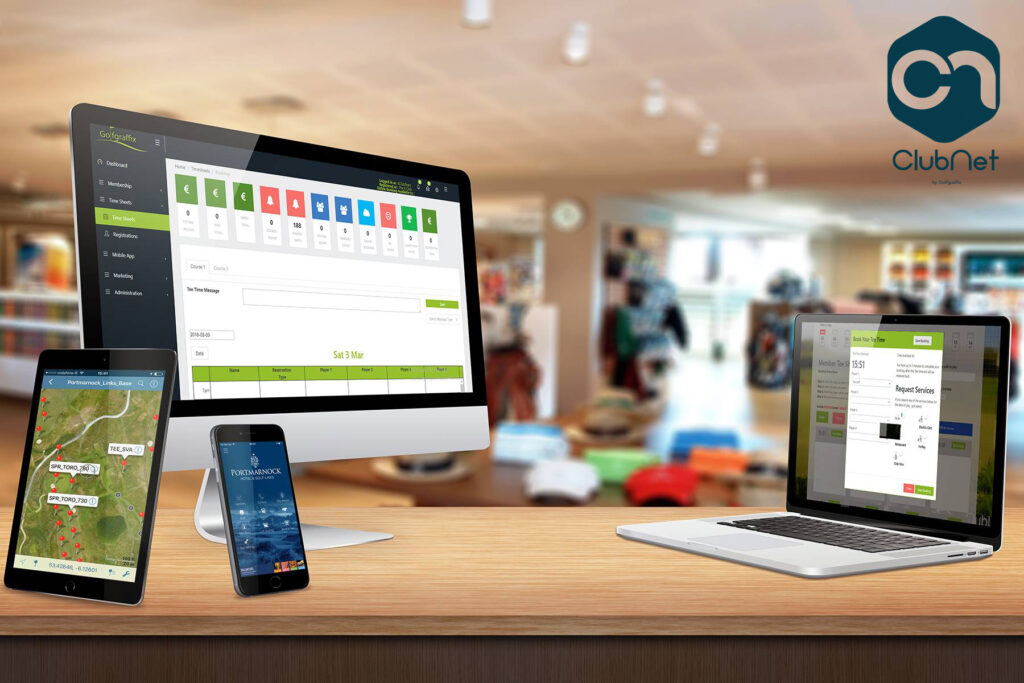
ClubNet is an all-in-one golf club management platform designed specifically for private member clubs. We bring membership management, tee bookings, EPOS, visitor bookings, competitions, direct debits, payments, member communications and a fully branded mobile app together into a single system.
Our philosophy has always been simple: if information only has to be entered once, clubs save time, reduce errors and have far better visibility of what’s happening across the business.
How is technology currently changing the way golf clubs operate day-to-day?
Technology has moved from being a back-office administration tool to becoming part of almost every member interaction.
Members now expect to book a tee time, pay subscriptions, top up their account, enter competitions and receive club communications from their phone. Behind the scenes, managers expect real-time reporting rather than spending hours pulling together spreadsheets.
The clubs embracing technology aren’t replacing people – they’re removing repetitive administration so staff can spend more time looking after members.
What are the biggest operational challenges club managers face today that technology can help solve?
The biggest challenge is probably doing more with the same number of staff.
Managers are expected to oversee memberships, finances, catering, competitions, visitor golf and communications while also delivering an excellent member experience.
Modern systems automate many of those routine tasks, reduce duplicate data entry and provide accurate reporting, allowing management to make quicker and better-informed decisions.
How can golf clubs use technology not just to save time, but to generate new revenue opportunities?
Saving time is only half the story.
Good technology should help clubs sell more visitor golf, improve occupancy through smarter tee-sheet management, simplify online payments and encourage greater use of member spending accounts.
When clubs have better visibility of member behaviour, they can also communicate more effectively, promote events and identify opportunities that may otherwise have been missed.

Many clubs worry about complexity when introducing new systems. What advice would you give managers looking to adopt new technology successfully?
Choose a partner rather than simply choosing software.
The best systems are the ones staff actually enjoy using. Training, support and implementation are every bit as important as the technology itself.
I’d also encourage clubs to think about where they’ll be in five years rather than just solving today’s problem. Changing systems is a significant undertaking, so it’s worth investing in something that will grow alongside the club.
Looking ahead five years, what role do you think technology will play in shaping the modern golf club?
Artificial intelligence will increasingly become the assistant rather than the replacement.
Managers will spend less time producing reports and more time interpreting them. Members will receive more personalised communication, bookings will become increasingly automated and administrative processes will continue to disappear into the background.
The clubs that combine technology with excellent personal service will be the ones that stand out.
Connectivity is often overlooked in club operations. Why is strong network infrastructure becoming essential for modern golf clubs?
Everything now depends on reliable connectivity.
Whether it’s the clubhouse, halfway house, greenkeepers, professional shop or golf buggies, clubs are relying on cloud-based systems more than ever before.
If the network isn’t reliable, every connected service suffers. Good infrastructure has become just as important as good software.
How does reliable connectivity enable other technologies such as booking systems, member apps and operational software to work more effectively?
Modern golf clubs rely on dozens of systems talking to each other in real time.
Reliable connectivity ensures bookings update instantly, payments are processed securely, member apps remain synchronised and staff always have access to accurate information.
When everything is connected properly, the technology becomes almost invisible – and that’s exactly how it should be.
Key Takeaways
- Bringing management functions together reduces duplicate data entry and gives clubs a clearer view of the business.Automation can remove repetitive administration and give staff more time to focus on members.
- Technology can support revenue growth through visitor bookings, tee-sheet management, online payments and targeted communications.
- Reliable connectivity is essential if booking platforms, payment systems, member apps and operational software are to work effectively.