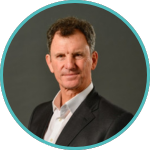
Teesside Golf Club Secretary Paul Hutchinson explains his reasons for undertaking the MHFA course and how his own experience shapes his approach to mental health.
Paul Hutchinson knows from experience how vital it is to have the appropriate support structures in place to help people who are struggling with their mental health.
The Teesside Golf Club Secretary spent 18 years in the police before being medically retired with chronic post-traumatic stress disorder. Since then, a move into golf club management has given him a new setting in which to use that experience positively.
When the opportunity arose to complete the Mental Health First Aid course supported by the GCMA, Paul saw it as a chance to help others recognise when support may be needed, open conversations earlier and signpost people towards the right help.
“I got medically retired from the police in 2022 for having chronic PTSD,” he said. “I’ve been through crisis teams, I’ve been through all the mental health teams, just from incidents I’ve dealt with.
“I’ve had that experience of going through difficult things and I wanted to use that to help support others. People might think it’s different being in the golf world, and there are some ways it is of course, but if you’re struggling, you’re struggling. It doesn’t matter what you do.”
Paul was one of 11 GCMA members to complete the two-day MHFA course, part of the Association’s work to strengthen regional wellbeing support for members. For Paul, the motivation came from lived experience and from a desire to turn something difficult into something useful.
“You try and completely flip it and think, ‘What can I do?’” he said. “I know what people are going through and I think it is difficult for certain demographics.
“For example, men often don’t talk and that’s a big part of the problem, so it’s about trying to create an environment where people can open up and have conversations if they’re finding things hard.”
The training covered how to recognise signs that someone may be struggling, how to respond when they open up, and where the Mental Health First Aider role begins and ends.
“Obviously this isn’t about you suddenly being able to fix someone,” Paul said. “It’s about being able to have those initial conversations with people if they’re opening up and going through issues, and knowing where they can get additional support.
“It’s just about being there and for them to know you’re listening, and that you genuinely care.”
That principle applies across all roles within golf clubs, where managers, secretaries and department heads often deal with pressures from different directions. Paul believes a culture of openness can make it easier for staff and colleagues to speak before problems build.
“That’s the way I’ve tried to do stuff here at Teesside,” he said. “A lot of people know a little bit about what I’ve experienced. They don’t know everything you’ve gone through, but they know you’ve left work with a mental health condition. I want them to know my door is open. I want people to know that I’ve been through it and I’m here if they need that support.”
Paul understands that different jobs and different lifestyle factors bring different pressures. The important point, he said, is how those pressures affect the person experiencing them.
“What sets you off is different, but the feeling you have as a person is the same,” he said. “You don’t have to feel like your problems are not important because you’re in a certain job — feelings are feelings, whatever the cause.”
That perspective also shapes how he thinks about the demands placed on golf club managers. Supporting others starts with looking after yourself.
“If you don’t look after yourself, it is a waste of time, because you can’t look after anyone,” he said. “That is my big thing. If you, as a golf club manager, aren’t taking care of yourself, how could you help a greenkeeper who’s struggling?
“You have to be, in a way, semi-selfish on some stuff. You have to be right yourself, because if you’re not right and a colleague is struggling, you’re not going to be able to deal with it. Look after number one first and then you’re in the right place to look after others.”
His police career also left Paul with skills that now transfer into golf, including perspective, calmness and the ability to step back before reacting.
“When I do have a bad day here, I almost step away and think, ‘My bad day is a good day in the old job,’” he said. “It’s trying to compartmentalise the two. That bad day here, granted, it is bad, but it isn’t as bad as the other ones.
“That’s what I try and learn from those bad experiences. Take a step back, have a minute, think about it, and then maybe you can act on that in a positive way.”
Paul’s route into the industry came after a difficult end to his police career, but he now sees that experience as part of what informs the way he works and supports others.
“I wouldn’t change anything,” he said. “The other job shaped what I do now. It has all allowed this to happen.
“I’ve been a scratch golfer for most of my life and now I’m working in golf, so for me it’s the best job in the world. If I can use what’s happened to me before to help others, that’s the jackpot.”
Click here to learn more about our commitment to supporting your mental health and wellbeing