A 130-year-old members’ club took a chance on an innovative new golf entertainment format – and it paid off.
Bush Hill Park may be steeped in history but the club’s willingness to embrace bold new ideas was in evidence as the London venue hosted the fast paced Blitz Golf series in June.
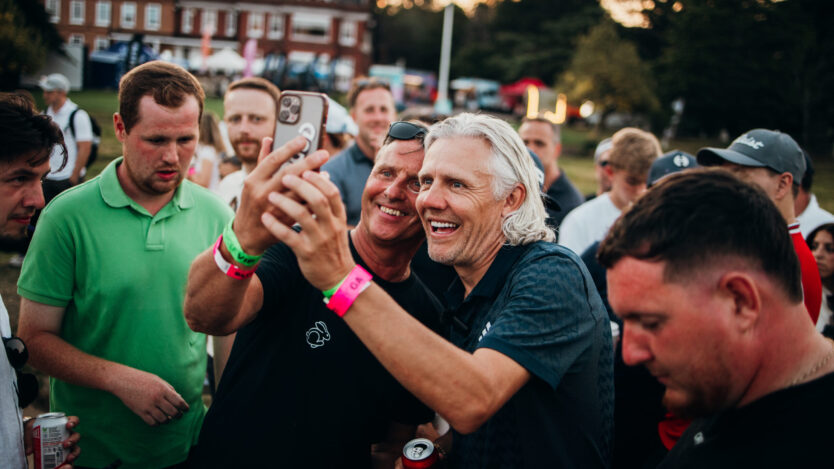
As one of four venues in the inaugural England Blitz Golf series, alongside Leeds Golf Centre, Gaudet Luce Golf Club and Lincoln Golf Club, Bush Hill Park welcomed an event built around speed, spectacle and accessibility. The result was a busy, high-energy evening that brought a broad demographic into the club for an experience very different from a traditional golf competition.
For Director and General Manager Stewart Judd, the success of the event justified the decision to step into unfamiliar territory.
“It was a fantastic event for us,” he said. “There was a DJ, food vendors, sponsors, VIP hospitality, outside bars and more than 1,000 general admission tickets.
“It brought a totally different profile of people to the club. There were influencers, celebrities, professionals from the DP World Tour and LET, and a real mix of younger people and families. It felt very different, and that was part of the appeal.”
Blitz Golf, which originated in Australia, is designed to deliver drama in a condensed window. The format combines progressively shorter rounds, with each cut becoming harder to survive, before a final sudden-death finish. A central stadium hole remains in play throughout, keeping action in front of spectators, while the whole event is designed to fit into three hours.
At Bush Hill Park, that meant a six-hole shotgun start, a cut to 12 players, a further three-hole stage and a final shootout, all wrapped in music, hospitality and a more informal spectator experience.
“It is a golf entertainment event,” Stewart said. “It is not typical golf, and they are very clear about that. When players got cut, they stayed around and mixed with everyone. Nobody disappeared. They all bought into what it was.”

Meanwhile, Stewart was balancing the chance to take in the occasion with the responsibility of making sure the event kept moving as it should. He trusted the team around him to deliver in their own areas, but as GM he was still keeping across the guest experience, the clubhouse, hospitality and the small operational details that can shape how an event feels on the day.
“Once I could see everything was happening smoothly, I did manage to enjoy it,” Stewart said. “By the end of the day you are absolutely shattered, but the atmosphere afterwards was great. “As the sun started setting and the DJ was going, it felt like a brilliant event for the club.”
Bush Hill Park’s decision to stage Blitz Golf also reflected Stewart’s wider view on the balance clubs must strike between heritage and innovation. The club has a long and proud history, but Stewart is clear that such a distinguished past should be a platform for progress rather than a barrier to it.
“We are a private members’ club and we are 130 years old, so there is legacy there,” he said. “I use the word heritage consciously. Too many golf clubs use tradition as a reason not to change.
“I want to celebrate the club’s heritage, but progress is ahead of us. We have to try new things, adapt to the pressures people have on their time and look at how we make the club relevant for families and different audiences.”
That thinking helped the club commit when Blitz Golf first approached. The format was unfamiliar, the presentation was deliberately different and there was no guarantee it would be the right fit.
“I like to be an early adopter if I think something is going to be relevant,” he said. “When Blitz first pitched it, I put it to the board and there were mixed views, but the feeling was that it could be a game-changer.
“If it didn’t work, then nothing ventured, nothing gained. If it did work, we had supported it from the start. At the very least, we would always be the first London venue.”

Making the event work required detailed planning across the whole club. Bush Hill Park’s course is split into three sections, so the routing had to accommodate the crowds and the shortened format.
“Our course manager was heavily involved,” Stewart said. “We had to find a way of getting six holes without crossing footpaths, because with general admission and crowds on site, we had to manage that properly.”
The demands extended well beyond the course. Marketing and communications, food and beverage, the kitchen, front of house and volunteers all had roles to play. There were also practical details around ticket scanning, payment points, Wi-Fi coverage, outside bars, VIP hospitality and vendor management.
“You are trying to think about the banana skins that could catch you out,” Stewart said. “How do we take payments out on the golf course? Do we need to boost Wi-Fi in certain areas? How do the outside bars work? How does the VIP package work?
“There was a lot to think about, but it seemed to go smoothly. We were doing the swan analogy on the day, trying to look calm while there was a lot going on underneath.”
Stewart also made a conscious decision to lean on the club’s management team, with selected volunteers supporting specific roles. The pace and atmosphere meant it was important to have people in place who understood the event would not follow the rhythm of the usual golf day.
“The Blitz team were clear from the start that this was not a normal event,” he said. “It was loud, fast and different, so we had to make sure the right people were in the right places.”
That preparation allowed Bush Hill Park to host an event that felt new without losing sight of what the club is. For Stewart, that is the important lesson. Clubs do not have to choose between respecting their past and trying something different. The challenge is knowing what should be protected and where there is room to evolve.
“We don’t walk around in tweeds with hickory-shafted clubs anymore,” he said. “Things change and evolve, and we either change with them or push boundaries ourselves.
“I don’t want to break down the historical side of golf, because heritage matters. But if you celebrate heritage properly, you can also look at how the club adapts and how it invests in the future.”
Key Takeaways
- Heritage can be a strength, but Stewart Judd believes clubs must avoid using tradition as a reason to stand still.
- Hosting Blitz Golf required whole-club planning, from course routing and crowd movement to bars, Wi-Fi, vendors and VIP hospitality.
- The event helped Bush Hill Park reach a different audience, with younger spectators, families, influencers, celebrities and professionals all part of the mix.