The Committee Procedures found on The R&A’s website provide valuable advice. If you haven’t, you need to read them
If you’re a regular reader of GCMA news, you might have noticed a recurring theme. When we talk about the Rules of Golf, about golf course set up, or the running of competitions, there is one source we regularly cite: the Committee Procedures.
If you’re a general manager and not aware of this document, or you’re part of a committee that deals with events, you should rectify that quickly – as it is a useful reference tool that can answer many of the questions that come up in day-to-day club life.
But what are the Committee Procedures, what do they cover, and why should you refer to them?
What are the Committee Procedures?
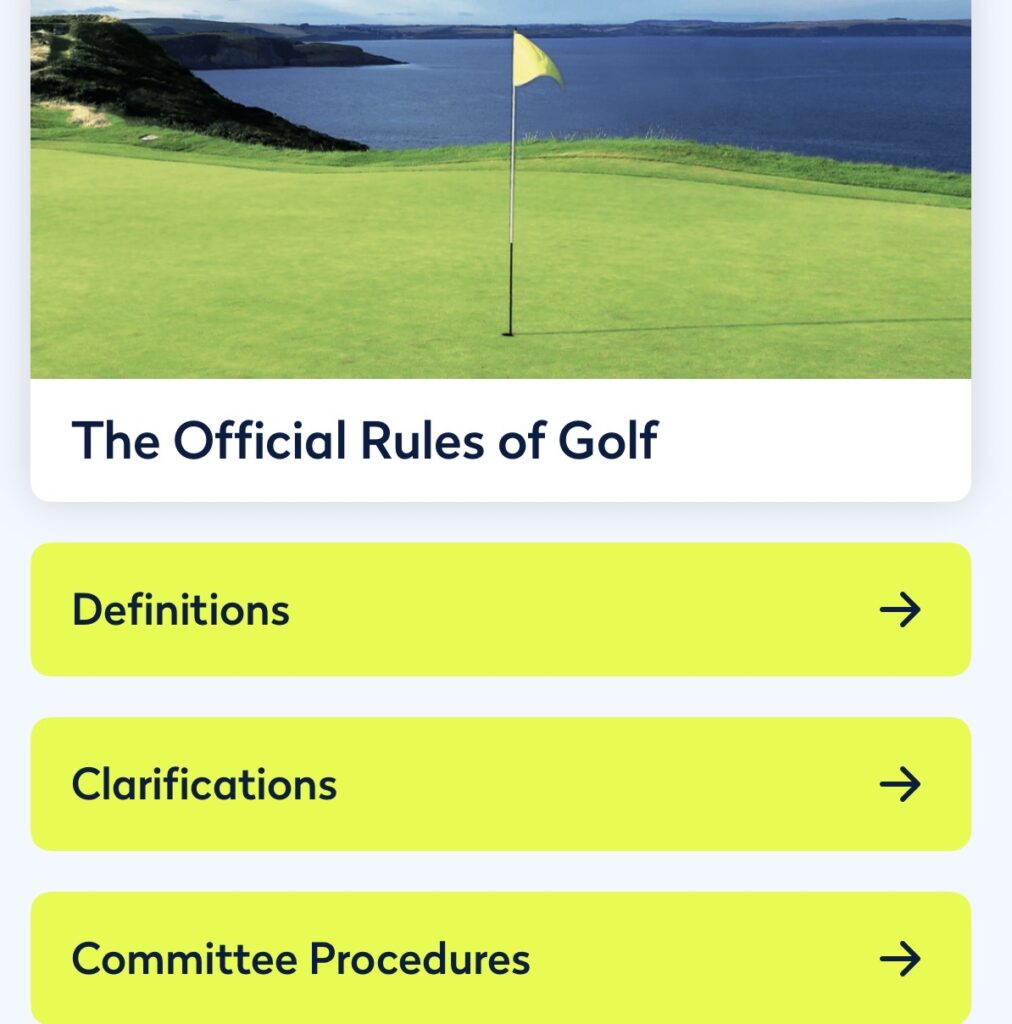
The Committee Procedures are the second section of The Official Guide to the Rules of Golf and they are also found in full on The R&A’s website and on the R&A’s Rules App.
They contain “practical advice for those involved in running day to day play at golf courses or running competitions at all levels of the game”.
The procedures are divided up into three main chapters, the first giving guidance for general play – essentially when a competition isn’t taking place – while the second covers competitions. There is an acknowledgement that the two themes often overlap.
The third looks at Model Local Rules and how they can be introduced.
What do they cover?
Pretty much everything you might ever think about in a club and course situation. From course boundaries – and advice if properties are bordering the course – to wrong rulings in competitions and administrative issues in publishing results, if a club has a question regarding the set-up of a golf course or the running of an event, the answer is more than likely to be found in the Committee Procedures.
They give advice on setting up Code of Conduct policies, eligibility requirements that can be considered for competitions, as well as dealing with pace of play and weather suspensions.
And whether it’s defining practice areas, teeing areas and hole locations, or setting up match play draws and resolving ties, it’s contained in the Committee Procedures.
The section on Model Local Rules is particularly useful as not only does it outline situations where they can be used, it lists more than 90 examples – ranging from penalty areas, to bunkers, and special relief procedures.
Not only that, but a draft text of the Local Rule is included for each. Clubs can quickly identify their situation and have a rule ready to go quickly and which doesn’t fall foul of the Rules of Golf.
Why should I read them – or use them as a reference?
Whether you know them off-pat or choose to use the Committee Procedures as a reference tool, knowledge is power.
General managers and committee members are often put on the spot by members and visitors, who have identified an issue – whether it’s rules or course based – and can be impatient for a quick answer. The Committee Procedures can often deliver that answer.
They can also act as an authoritative guide. Should we mark our penalty areas red or yellow? Can we cut the rough when a competition is ongoing? Are there any restrictions on where we can put our hole locations? How can we establish a pace-of-play policy?
Whatever the question, the Committee Procedures can provide advice and give those charged with running the golf club a steer on what action to take.
To read the Committee Procedures, click here.
Key takeaways
- The Committee Procedures can be your operational handbook – they provide practical answers and a consistent framework for decision making.
- Managers and committee members can treat them as a reference point rather than relying simply on opinion or precedent.
- Model Local Rules can save clubs significant time and uncertainty – instead of creating rules that inadvertently conflict with the Rules of Golf, clubs can find a solution and implement it with confidence.