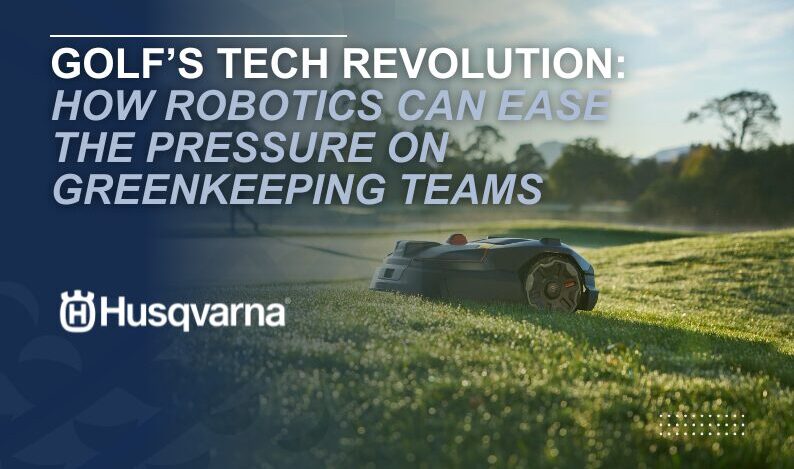
In the latest in a series exploring golf’s technological transformation, we speak to Husqvarna’s Jonathan Snowball about how robotic mowing can support course maintenance, improve consistency and help clubs respond to labour challenges.
From the way clubs make strategic decisions to how courses are maintained and members are engaged, technology is reshaping every corner of the game.
In this series, we will explore the innovations redefining modern golf operations and what they mean for clubs, professionals and players alike.
We will look at:
- Data-driven decision making, examining how clubs are using real-time insights to guide everything from pricing and participation to retail performance and coaching outcomes. Smart data is no longer a luxury, it is becoming essential to staying competitive.
- Smarter operations and automation, where integrated software, booking systems and AI-powered tools are streamlining administration, freeing up staff time and improving profitability.
- Groundbreaking agronomy and maintenance technology that transforms sustainability, efficiency and playability, from GPS-guided machinery to advanced irrigation and turf analytics.
- Member experience and engagement technology, where apps, personalisation tools and digital communication platforms are helping clubs build stronger, longer-lasting relationships.
In this latest installment, we’re in conversation with Husqvarna’s Jonathan Snowball – Head of Business Unit Professional UK, about the role robotics can play in supporting greenkeeping teams, improving turf quality and helping clubs manage course maintenance more efficiently.
Can you start by explaining what Husqvarna does and how your robotics technology is being used within golf course maintenance?
Husqvarna is a global leader in outdoor power products and a pioneer in robotic mowing, increasingly applied within golf course maintenance where high-quality surfaces must be maintained with limited resources.
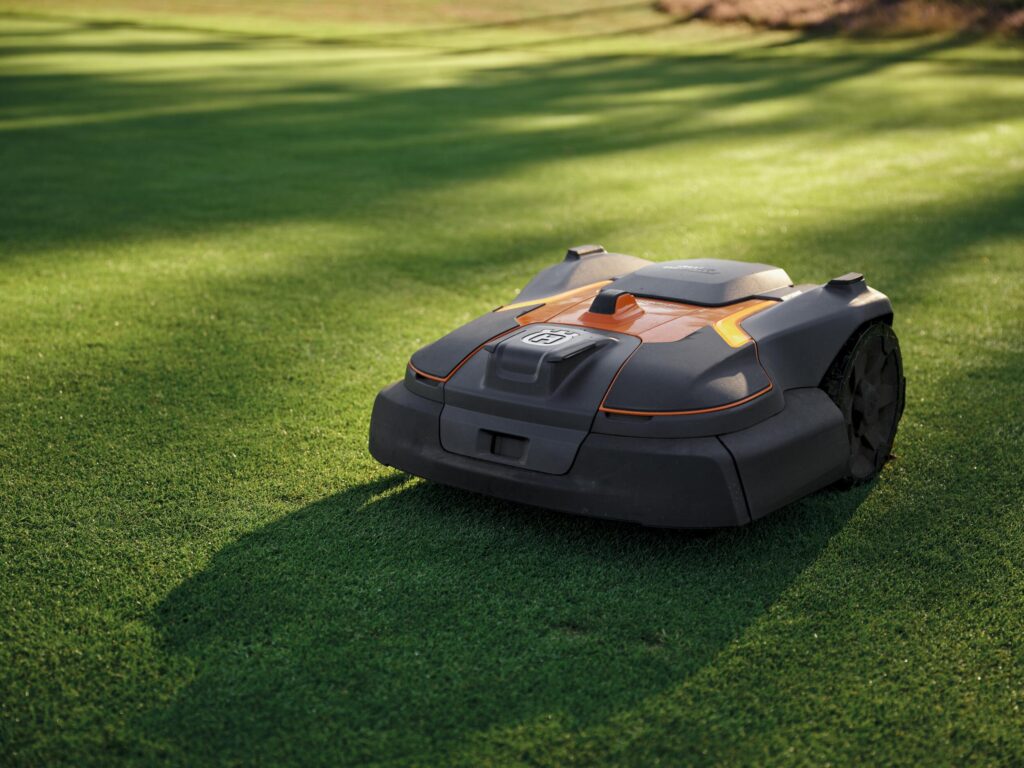
On golf courses, our robotic mowers maintain fairways, semi-rough and rough using high-precision GPS guidance. Rather than replacing greenkeeping teams, they support them by taking on repetitive tasks, enabling staff to focus on skilled areas such as greens, bunkers and overall playability.
How is technology currently changing the way golf clubs operate day-to-day?
Technology is fundamentally transforming golf course operations from labour-intensive and reactive processes into data-driven and efficient systems.
With robotics and connected systems, many routine tasks can now be automated and managed digitally. Complex, automated irrigation systems are already the norm, so why shouldn’t mowing follow suit? Greenkeeping teams can monitor machines, adjust schedules and respond to conditions remotely.
This creates a more flexible working environment, reduces pressure during peak periods and enables teams to focus their time where it adds the most value, while improving consistency through continuous, uniform results.
What are the biggest operational challenges club managers face today that technology can help solve?
We work alongside leading organisations within golf, particularly the GCMA, and our conversations with your members consistently highlight labour availability as one of the biggest challenges. Many clubs operate with smaller teams than would be ideal, making it difficult to maintain high standards consistently.
At the same time, clubs face pressure to reduce costs, improve sustainability and extend playing availability. Technology, particularly robotics, helps address this by reducing reliance on manual labour, lowering costs and enabling more consistent turf management.
How can golf clubs use technology not just to save time, but to generate new revenue opportunities?
The most immediate benefit is operational efficiency; however, there are also clear revenue implications. By maintaining more consistent playing conditions and extending the playable season, clubs can increase tee-time availability and enhance member satisfaction, creating more opportunities for green fee revenue.
Autonomous machinery can also be used to maintain practice areas, driving ranges or academy courses, helping shift a venue from a single 18-hole course to a more inclusive, welcoming club with a more diverse offering, without increasing labour requirements or costs.
Many clubs worry about complexity when introducing new systems. What advice would you give managers looking to adopt new technology successfully?
We’ve found the key to long-term adoption is to begin with simple implementations and build confidence over time. Most clubs initially introduce robotics in specific areas rather than across the entire course, enabling teams to understand how the technology integrates into existing operations.
It’s also important to observe the technology in practice and learn from other clubs already using it. Each club adopts at their own pace, but a phased approach helps ensure smooth integration and long-term success.

Looking ahead five years, what role do you think technology will play in shaping the modern golf club?
Technology and automation are already becoming integral to day-to-day golf course operations, and this trend will continue to accelerate. Modern irrigation installations are often automated, and other daily operations now utilise AI or automation, such as sprayers that target only at-risk areas of the turf.
This shift towards smart technology will continue, with systems becoming increasingly connected. This will result in more integrated operations, where machines and teams collaborate more efficiently, helping clubs manage costs, address labour challenges and maintain high standards.
Robotic mowing technology is becoming more visible on golf courses. How can automation improve both efficiency and turf quality?
Robotic mowing fundamentally changes how turf is maintained. Because machines operate continuously, they cut smaller amounts more frequently, promoting healthier growth, denser turf and more consistent playing surfaces over time.
Automation also improves efficiency by removing the need for manual mowing of large areas, with machines able to operate overnight or between periods of play.
Robotic mowers are lighter and don’t require fuel or an operator, reducing soil compaction and allowing them to perform effectively in softer conditions.
How can robotics help golf courses address the labour challenges currently facing many greenkeeping teams?
Clubs that are successfully integrating robotics into their operations view them as a support tool for greenkeeping teams, at a time when it has never been more difficult to recruit high-quality staff.
By taking on repetitive tasks such as fairway mowing, it allows skilled staff to focus on areas requiring expertise and attention to detail. It also helps redefine the role of a greenkeeper, shifting it towards a more skilled, technology-driven position, while improving job satisfaction and making the profession more attractive to the next generation.
Key Takeaways
- Robotic mowing can support greenkeeping teams by taking on repetitive tasks across fairways, semi-rough and rough, allowing skilled staff to focus more time on greens, bunkers and overall playability.
- Automation can help clubs manage labour pressures, reduce reliance on manual mowing and maintain more consistent playing conditions, with machines able to operate remotely, overnight or between periods of play.
- Robotics can contribute to healthier turf through lighter machinery, more frequent cutting and reduced soil compaction, while also helping clubs extend playability and create more value from practice areas, driving ranges and academy courses.