
In the latest in a series exploring golf’s technological transformation, we speak to Rain Bird’s Daniel Scarr about how data-driven irrigation can improve course conditioning, reduce resource use and help clubs respond to environmental pressures.
From the way clubs make strategic decisions to how courses are maintained and members are engaged, technology is reshaping every corner of the game.
In this series, we will explore the innovations redefining modern golf operations and what they mean for clubs, professionals and players alike.
We will look at:
- Data-driven decision making, examining how clubs are using real-time insights to guide everything from pricing and participation to retail performance and coaching outcomes. Smart data is no longer a luxury, it is becoming essential to staying competitive.
- Smarter operations and automation, where integrated software, booking systems and AI-powered tools are streamlining administration, freeing up staff time and improving profitability.
- Groundbreaking agronomy and maintenance technology that transforms sustainability, efficiency and playability, from GPS-guided machinery to advanced irrigation and turf analytics.
- Member experience and engagement technology, where apps, personalisation tools and digital communication platforms are helping clubs build stronger, longer-lasting relationships.
In this latest installment, we’re in conversation with Daniel Scarr, Rain Bird‘s Area Sales Manager for Iceland, Ireland and the UK, about how modern irrigation technology can improve water management, support greenkeeping teams and help clubs maintain consistent playing conditions.
Can you start by explaining what Rain Bird does and how your technology supports golf course irrigation and water management?
Rain Bird is a global leader in The Intelligent Use of Water™, providing innovative irrigation systems engineered to maximise the efficient application of water while maintaining the high-quality turf golf courses demand.
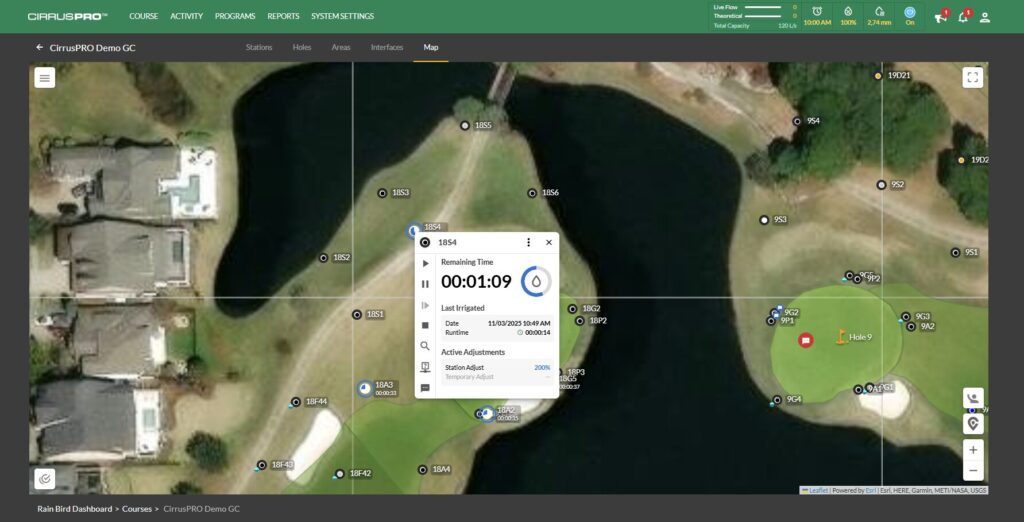
Our technology supports water management through the IC System™ and CirrusPRO™ central control, which integrate real-time data from soil sensors, weather stations and pump systems to ensure precise watering above and below the surface.
How is technology currently changing the way golf clubs operate day-to-day?
Technology is giving golf clubs greater control, flexibility and visibility over their day-to-day operations. Instead of relying solely on fixed irrigation schedules or manual checks, course managers can now use real-time data, mobile access, weather inputs, alerts and reporting to make quicker and better-informed decisions.
With systems such as CirrusPRO, teams can manage irrigation from a phone or tablet, respond to faults faster, adjust irrigation around course conditions and spend more time where they add the most value: out on the course.
The biggest change is that technology is helping clubs move from reactive to proactive management. This can improve efficiency, turf quality, water use and labour planning, while also giving the clubhouse oversight of total water application. That is a powerful tool when managing abstraction licences.
What are the biggest operational challenges club managers face today that technology can help solve?
Club managers face challenges across the business, but rising water, energy and labour costs are increasingly coming to the fore. Many clubs are also operating with ageing systems that consume resources and demand significant amounts of staff time.
Modern technology can address specific problem areas relating to course management. Because of the age and limitations of some irrigation systems, we hear of course managers having to operate by torchlight overnight to protect their courses during dry weather. Any technology that can eliminate that requirement is a positive development.
How can golf clubs use technology not just to save time, but to generate new revenue opportunities?
Golf clubs can use technology to create revenue opportunities by improving the quality, consistency and reliability of the playing experience.
It is not unusual for us to receive feedback from clubs shortly after completing an irrigation project that improved course conditions have led to happier members, stronger retention and a more attractive product for visitors and prospective members.
Technology also gives greenkeeping teams more time to focus on presentation, detail work and long-term course improvement rather than manual checks and reactive problem-solving.
In that sense, it does more than save time. It helps clubs produce a better product, protect their existing revenue and create new commercial opportunities.
The real opportunity lies not only in operational efficiency, but in turning better course conditions into stronger commercial performance.
Many clubs worry about complexity when introducing new systems. What advice would you give managers looking to adopt new technology successfully?
My advice would be to start with the outcome the club wants to achieve. That could be improving course consistency, reducing water use, supporting the greenkeeping team, improving reporting or creating a better playing experience for members and visitors.
Once the objective is clear, it becomes easier to choose technology that supports the club’s wider business goals.
Strong support is also essential. With the right onboarding, local support, training and ongoing assistance through services such as the Global Service Plan, teams can build confidence quickly and avoid feeling they have been left on their own after installation.
Clubs should also look for systems that simplify operations rather than add another layer of complexity. A platform that centralises irrigation data, weather inputs, alerts, reporting and remote access within one interface makes adoption easier for the team and gives managers greater visibility over performance, risk and return on investment.
Finally, new systems should be viewed as tools that add value. Successful adoption is not about replacing people with technology. It is about giving the team better tools, information and support so they can make stronger decisions and deliver a more consistent, efficient and commercially valuable golf course.
Looking ahead five years, what role do you think technology will play in shaping the modern golf club?
Over the next five years, technology will be essential in helping golf clubs remain resilient in the face of climate change and evolving environmental legislation.
Modern irrigation will play a critical role in course survival, enabling clubs to maintain high standards of play during periods of drought or restricted water allocation.
At the same time, as data becomes increasingly central to day-to-day operations, clubs will need a single point of control that makes data-driven decision-making easier.
Bringing key information together in one place will help managers respond faster, plan more effectively and operate their courses with greater efficiency and confidence.
Water management is becoming one of the biggest sustainability challenges for golf courses. How is modern irrigation technology helping clubs use water more efficiently?

Water management is one of the biggest sustainability challenges for golf clubs, and modern irrigation technology is helping them use water with greater accuracy and control.
Platforms such as CirrusPRO centralise irrigation data, weather inputs, alerts, reporting and system performance within one interface, allowing course managers to make precise, station-specific decisions based on real-time conditions.
This helps clubs reduce overall water use while making each application more effective. Instead of simply applying more water, teams can irrigate more intelligently, targeting the areas that need it most, reducing waste, improving turf response and protecting playing conditions.
Whether through a full renovation or a central control upgrade, modern irrigation technology helps clubs optimise schedules around actual environmental demand and manage water more responsibly.
The goal is simple: apply the right amount of water in the right place at the right time.
What role will data-driven irrigation systems play in improving both course conditioning and environmental sustainability?
Data-driven irrigation systems improve course conditioning by using soil moisture and evapotranspiration data to apply the right amount of water at the right time.
This helps prevent both overwatering and underwatering, supporting more consistent turf health and playability.
These systems also strengthen environmental sustainability by reducing water and electricity use. Clubs can therefore lower resource consumption while continuing to deliver high-quality course conditions for their members.
Key Takeaways
- Modern irrigation systems give course managers greater control over water application by bringing soil, weather, pump and system data together, helping teams make faster and more precise decisions.
- Remote management, automated alerts and station-specific irrigation can reduce manual checks, prevent unnecessary overnight work and give greenkeeping teams more time to concentrate on course presentation and improvement.
- More consistent playing conditions can support member satisfaction, retention and visitor appeal, while efficient water and energy use can help clubs respond to rising costs, drought and tighter environmental requirements.